
03/08/2026
What Is a Roof Rake and Why Does It Matter for Your North Texas Home?

The roof rake is one of the most important yet frequently overlooked components of your home’s roofing system. If you have ever looked at the side of a house where the roofline forms a diagonal edge along the gable end, you were looking at the roof rake. This sloped edge plays a critical role in protecting your home from water intrusion, wind damage, and pest entry, yet many Dallas-Fort Worth homeowners do not know what it is or how to maintain it.
Understanding your roof rake and keeping it in good condition is essential for the long-term performance of your entire roofing system. In North Texas, where severe thunderstorms, high winds, and occasional hail events put constant stress on every edge and joint of your roof, a damaged or neglected rake can lead to expensive repairs that could have been easily prevented.
This guide explains exactly what a roof rake is, how it differs from other roof edges, why it matters for weather protection, and what you can do to keep it in top condition.
What Exactly Is a Roof Rake?
A roof rake is the sloped edge of a roof that runs along the gable end of the house. It extends from the eave (the horizontal lower edge of the roof) up to the ridge (the peak). If you stand in front of a home with a traditional gable roof and look at the triangular section where the siding meets the roofline, the diagonal edges on both sides are the rakes.
The term “rake” refers specifically to the inclined edge of the roof, not a tool. It is a fixed architectural feature that defines the boundary between your roof surface and the open air at the gable end.
Roof Rake vs. Roof Eave: Understanding the Difference
The eave and the rake are both edges of your roof, but they serve different functions and face different challenges.
The eave is the horizontal edge at the bottom of your roof that runs parallel to the ground. It is where your gutters are typically attached, and it is designed to direct water runoff away from your home’s foundation. The eave overhang provides shade and protects your walls and windows from rain.
The rake is the sloped edge along the gable end. Unlike the eave, the rake does not typically carry gutters. Instead, it relies on drip edge flashing to direct water away from the fascia and into the gutter system at the eave. The rake is more exposed to wind because it sits at the gable end, where wind forces tend to concentrate.
Both edges are essential to your roof’s performance, but the rake often requires more attention because of its vulnerability to wind uplift and its role in preventing water from infiltrating the gable end of your home.
Components of a Roof Rake
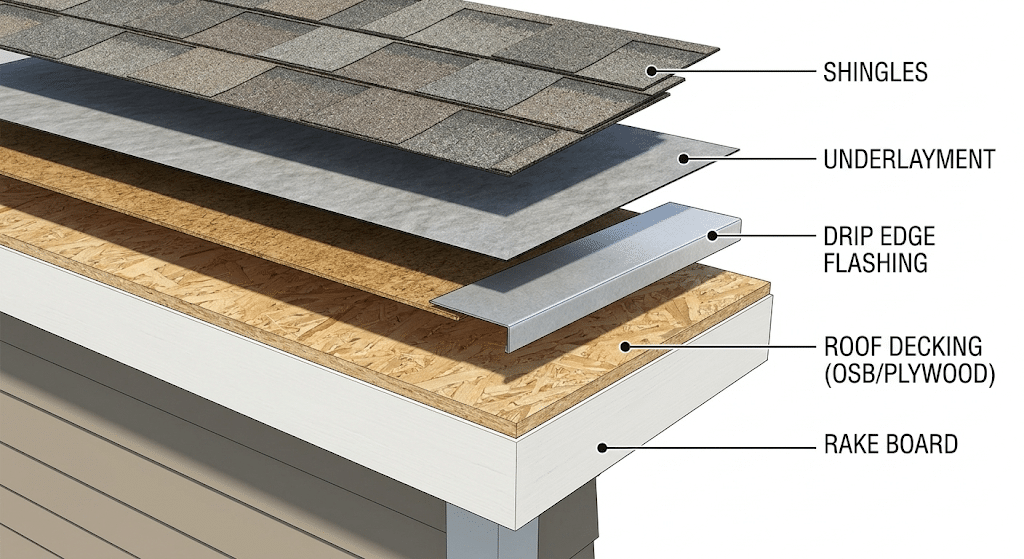
The roof rake is not a single piece of material. It is an assembly of several components that work together to protect the edge of your roof. Understanding these components helps you identify problems and communicate effectively with your roofing contractor.
Rake Board (Fascia Board at the Rake)
The rake board is the flat board that runs along the sloped edge of the roof, covering the ends of the roof decking and framing. It serves a similar function to the fascia board at the eave. The rake board provides a finished appearance and serves as the mounting surface for drip edge flashing.
In many North Texas homes, the rake board is made from wood (typically pine or cedar) and is painted or wrapped with aluminum or vinyl to protect it from moisture and weathering. Over time, wood rake boards can rot if water infiltrates behind the flashing or paint, especially on the west-facing and south-facing gable ends that receive the most weather exposure.
Drip Edge Flashing
Drip edge is a metal flashing strip installed along both the eave and the rake. At the rake, the drip edge extends over the edge of the roof decking and directs water away from the rake board and into the gutter system or away from the fascia.
Proper drip edge installation at the rake is one of the most important details of any roofing project. Without it, water can wick back under the shingles and behind the rake board through capillary action, causing hidden rot and water damage. Texas building codes and most shingle manufacturers require drip edge at both the eave and rake.
Rake Overhang
The rake overhang is the portion of the roof that extends beyond the exterior wall at the gable end. This overhang provides some protection for the siding and wall below. In the DFW area, rake overhangs on residential homes typically range from a few inches to 12 inches or more, depending on the architectural style.
Homes with minimal or no rake overhang are more vulnerable to wind-driven rain penetrating behind the siding at the gable end. Homes with larger overhangs get better wall protection but may face higher wind loads on the rake during severe storms.
Soffit at the Rake (if present)
On homes with a wider rake overhang, there may be a soffit panel (the underside of the overhang) connecting the edge of the roof to the exterior wall. This soffit helps seal the overhang area from pest intrusion and can contribute to attic ventilation if vented soffit panels are used.
Why the Roof Rake Matters for Weather Protection in North Texas
The DFW climate puts significant demands on every part of your roofing system, and the roof rake is no exception. Here is why this component deserves your attention.
Wind Vulnerability
The gable end of a home is one of the most wind-vulnerable areas during severe storms. Wind creates uplift pressure along the rake edge, and if the shingles, drip edge, or underlayment at the rake are not properly secured, wind can peel back materials and expose the roof decking to rain.
During the severe thunderstorms and occasional tornadoes that affect the Dallas-Fort Worth area, the rake edge is often one of the first areas to sustain damage. Properly installed starter shingles, drip edge flashing, and roofing cement at the rake dramatically improve your roof’s wind resistance.
Water Intrusion Prevention
Every time it rains in North Texas, water running down your roof reaches the rake edge and must be directed away from the structure. If the drip edge is missing, damaged, or improperly installed, water can travel behind the rake board, soak into the roof decking, and cause rot that spreads into the attic and wall framing.
Wind-driven rain is an even bigger concern. DFW thunderstorms frequently produce horizontal rain that pushes water laterally across the roof surface and up under shingle edges at the rake. Proper flashing, underlayment overlap, and shingle overhang at the rake create multiple layers of defense against this type of water intrusion.
Pest Entry Points
Gaps between the rake board, soffit, and roof decking can provide entry points for squirrels, birds, bats, wasps, and other pests that are common throughout the DFW area. These animals can cause significant damage to insulation, wiring, and framing once they gain access to the attic. Maintaining tight, well-sealed rake assemblies helps keep unwanted visitors out of your home.
Common Roof Rake Problems in DFW Homes

Knowing what to look for helps you catch rake problems before they become major issues. Here are the most common problems that roofing professionals in the DFW area encounter.
Rotting Rake Boards
Wood rake boards are susceptible to moisture damage, especially on the sides of the home that receive the most weather exposure. In North Texas, the south-facing and west-facing gable ends tend to deteriorate faster due to the combination of intense sun, driving rain, and occasional hail. Signs of rotting rake boards include soft or spongy wood, peeling paint, visible discoloration, and pieces of the board crumbling or falling away.
Missing or Damaged Drip Edge
Drip edge at the rake can be dented, pulled away, or completely missing due to storm damage, improper installation, or age. Without functioning drip edge, water infiltration behind the rake board accelerates, and the exposed edge of the roof decking becomes vulnerable to moisture and insect damage.
Shingle Overhang Issues
Shingles at the rake should overhang the drip edge by approximately 1/4 to 3/4 of an inch. If the overhang is too short, water can wrap around the edge and travel behind the drip edge. If the overhang is too long, shingles can break off in high winds. Both scenarios are common in homes across Fort Worth, Dallas, Arlington, Keller, and surrounding communities.
Gaps and Separation
Over time, the natural expansion and contraction caused by DFW temperature extremes can cause the rake board, drip edge, and soffit components to separate. These gaps may look minor, but they create pathways for water, wind, and pests to reach the structure beneath.
Roof Rake Maintenance Tips for DFW Homeowners
Keeping your roof rake in good condition does not require a lot of effort, but it does require regular attention. Here are practical maintenance tips that every DFW homeowner should follow.
Conduct Visual Inspections Twice a Year
Walk around your home in the spring and fall and visually inspect the rake edges from ground level. Look for signs of paint peeling, wood deterioration, gaps between components, dented or pulled drip edge, and any shingles that appear to be lifting or missing at the rake.
Inspect After Every Major Storm
North Texas storm season runs roughly from March through June, with additional risks from fall and winter storms. After any storm that produces hail, high winds, or heavy rain, take a few minutes to inspect your rake edges for new damage.
Keep Trees Trimmed
Overhanging tree branches can scrape against rake boards and shingles during wind events, causing physical damage and creating entry points for moisture and pests. Keep branches trimmed at least three to four feet away from all roof edges.
Address Problems Promptly
Small rake issues become big problems when ignored. A loose piece of drip edge or a small area of soft wood today can lead to extensive water damage, structural rot, and costly repairs within a year or two. Prompt repairs are always more cost-effective than delayed ones.
When to Consider Roof Rake Repair or Replacement
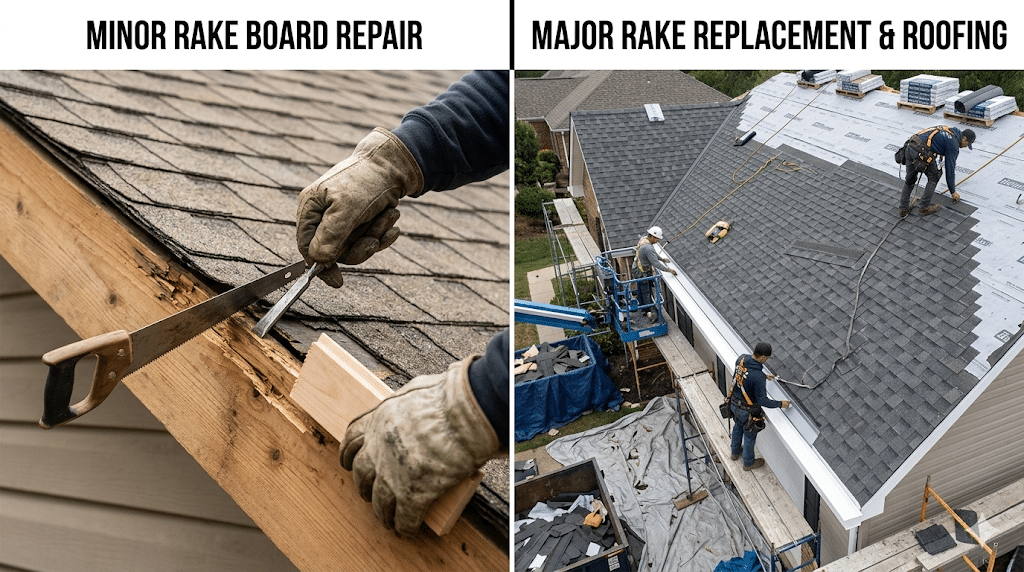
Some rake issues can be addressed with simple repairs, while others require more extensive work. Here is how to know which situation you are dealing with.
Minor repairs, such as reattaching loose drip edge, sealing small gaps, or replacing a short section of rake board, are typically straightforward and inexpensive. A qualified roofing contractor can handle these repairs during a routine maintenance visit.
Major repairs or replacement may be needed if the rake board has extensive rot, the roof decking at the edge shows signs of water damage, or multiple components need to be replaced. In these cases, the work often coincides with a roof replacement, as addressing structural issues at the rake requires removing shingles and underlayment in that area.
If you are getting a new roof, make sure your contractor’s scope of work specifically includes inspection and replacement of rake boards and drip edge as needed. This is an area where cutting corners during installation can lead to problems within just a few years.
Concerned About Your Roof Rake or Due for a Roof Inspection?
The roof rake may be easy to overlook, but catching problems early can save you thousands in repairs down the road. If you have noticed peeling paint, soft wood, or gaps along your rake edges — or if you simply have not had your roof inspected in the past year — Veteran Brothers Roofing and Restoration is ready to help. We serve homeowners across Fort Worth, Dallas, Arlington, Keller, Southlake, Grapevine, and the surrounding DFW area.
Call us at (817) 875-9834 to schedule a complimentary roof inspection. Our experienced crew will evaluate your rake boards, drip edge, flashing, and all roof edges to identify any issues before they become costly problems.
Frequently Asked Questions
Is a roof rake the same as a snow rake tool?
No. A roof rake (the architectural feature) is the sloped edge of a roof along the gable end. A snow rake (the tool) is a long-handled device used to pull snow off a roof from ground level. While snow rakes are more commonly associated with northern climates, the architectural roof rake is a feature on virtually every gable-roofed home in the Dallas-Fort Worth area.
How much does it cost to repair a roof rake in the DFW area?
Minor rake repairs, including replacing drip edge and small sections of rake board, typically cost $200 to $800. More extensive repairs involving multiple rake boards, decking repair, and new flashing can range from $800 to $2,500 or more. Costs depend on the extent of the damage, accessibility, and the materials used.
Can I inspect my roof rake myself?
You can do a basic visual inspection from ground level using binoculars or a camera with a good zoom lens. Look for paint peeling, wood discoloration, gaps between components, and any visible damage to the drip edge or shingles at the rake. For a thorough inspection, a professional roofer can safely access the roof and evaluate the condition of all rake components.
Does my roof rake need drip edge even if I have gutters?
Yes. Drip edge at the rake serves a different function than gutters. While gutters collect water at the eave, drip edge at the rake prevents water from wicking back under the shingles and behind the rake board. Both components are necessary for complete roof edge protection, and drip edge is required by Texas building codes.
About Veteran Brothers Roofing & Restoration
Veteran Brothers Roofing & Restoration is a trusted roofing company proudly serving homeowners and businesses throughout the Dallas-Fort Worth metroplex. Founded by military veterans, our team brings the same discipline, integrity, and attention to detail that defined our service to our country into every roofing project we take on. From roof rake repairs and edge maintenance to full roof replacements and storm damage restoration, we deliver exceptional craftsmanship backed by honest communication and transparent pricing. We proudly serve communities across the DFW area, including Fort Worth, Dallas, Arlington, Keller, Southlake, Grapevine, Bedford, Euless, and North Richland Hills. Contact us at (817) 663-1258 to schedule your free roof inspection today.
INCOMING MESSAGE
It’s storm season. If you think there’s been storm damage to your roof, or would simply like the peace of mind of knowing you’re in the clear, Veteran Brothers is here to help.
