
03/08/2026
Understanding Roof Eaves: Their Role in Protecting Your DFW Home

The roof eave is one of the most important structural components of your home, yet most DFW homeowners rarely think about it until something goes wrong. A roof eave is the lower edge of a roof that extends beyond the exterior wall of the house, creating an overhang that serves critical protective functions. From directing rainwater away from your foundation to providing shade that reduces energy costs, properly designed and maintained eaves are essential to your home’s health and longevity.
In the Dallas-Fort Worth area, where severe thunderstorms, intense UV radiation, and wide temperature swings put constant stress on every part of your home’s exterior, eaves play an even more critical role. They are your first line of defense against wind-driven rain, and they protect your siding, windows, and foundation from direct water exposure. Understanding how your roof eaves work, what components make them function, and how to maintain them properly can save you from expensive water damage and structural issues.
Whether you are dealing with rotting fascia boards, a damaged soffit, or simply want to understand more about how your roof system works as a whole, this guide covers everything DFW homeowners need to know about roof eaves and their essential role in protecting your home.
What a Roof Eave Is and How It Works
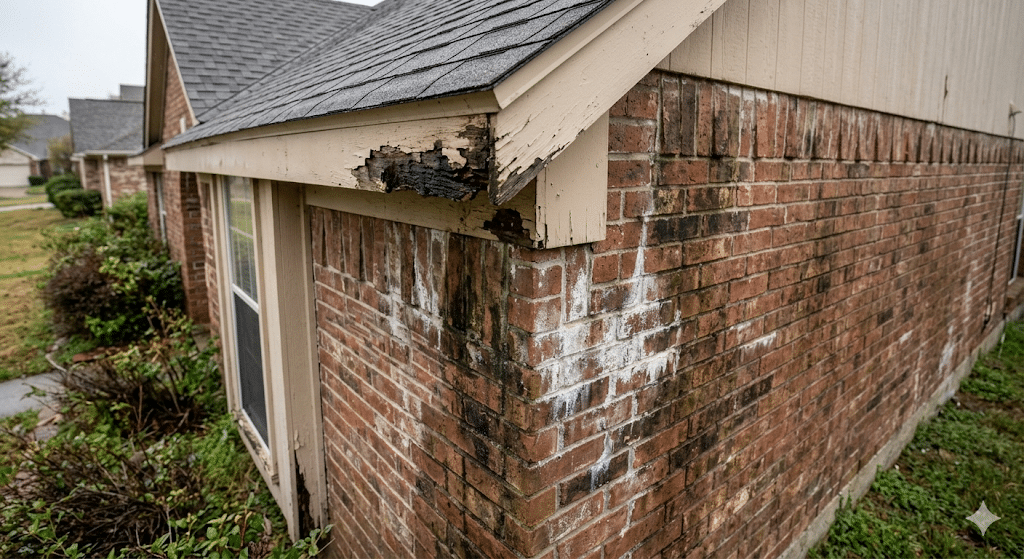
A roof eave is the portion of the roof that overhangs the exterior walls of your home. When you stand next to your house and look up, the area where the roof extends past the wall is the eave. This overhang is not just an architectural design choice. It serves several critical functions that protect your home from weather damage.
The eave creates a horizontal extension that directs rainwater away from your home’s walls and foundation. Without adequate eaves, rain would run directly down your exterior walls, causing moisture damage, staining, and eventually rot. The overhang also provides shade to your windows and walls, reducing heat gain during DFW’s brutally hot summers.
The typical residential roof eave overhang in North Texas ranges from 12 to 24 inches, though some architectural styles feature deeper overhangs of 36 inches or more. The ideal depth depends on the home’s style, the local climate conditions, and the level of protection desired. In DFW’s climate, a deeper eave overhang generally provides better protection against both rain and sun exposure.
Roof Eave vs. Roof Overhang: Understanding the Difference

Many homeowners use the terms “eave” and “overhang” interchangeably, and while they are closely related, there is a technical distinction worth understanding.
The roof eave refers specifically to the lower horizontal edge of the roof where it meets or extends beyond the wall. It runs along the sides of the roof that are parallel to the ground. The overhang is the actual distance that the roof extends beyond the exterior wall. In other words, the eave is the edge, and the overhang is how far that edge extends.
The rake is another term that is sometimes confused with the eave. The rake refers to the sloped edge of the roof along the gable end, running from the eave to the ridge. While the eave is horizontal, the rake follows the angle of the roof slope. Both the eave and the rake can have overhangs, but they serve slightly different purposes. Eave overhangs primarily manage water drainage and provide shade, while rake overhangs protect the gable wall from rain and sun.
Understanding this terminology helps you communicate more effectively with roofing contractors and understand their recommendations when repairs or improvements are needed.
Key Components of the Roof Eave System
The eave is not a single piece of material. It is a system of interconnected components that work together to protect your home and maintain proper airflow through the attic.
Soffit
The soffit is the horizontal surface that covers the underside of the eave overhang. When you stand beneath the eave and look up, you are looking at the soffit. It serves two critical functions: protecting the rafter tails and roof deck from weather exposure, and providing ventilation for your attic through perforated or vented panels.
In DFW homes, soffit ventilation is especially important because proper airflow helps regulate attic temperatures during summer months. Without adequate ventilation, attic temperatures can exceed 150 degrees, accelerating shingle deterioration and increasing cooling costs. Vented soffit panels allow fresh air to enter the attic at the lowest point, creating airflow that exits through ridge vents or other exhaust vents at the top of the roof.
Soffits in North Texas homes are typically made from aluminum, vinyl, or wood. Aluminum and vinyl soffits are more durable and require less maintenance, while wood soffits offer a traditional appearance but need regular painting and inspection for rot.
Fascia
The fascia is the vertical board that runs along the outer edge of the eave, covering the ends of the roof rafters or trusses. It is the “face” of the eave and is the surface where gutters are typically attached. The fascia provides a finished appearance to the roofline and protects the exposed ends of the roof framing from moisture and pests.
Fascia boards are commonly made from wood, composite materials, or aluminum. Wood fascia is the most traditional option but is vulnerable to moisture damage and rot, especially in DFW’s humid spring months. Composite and aluminum fascia options offer better moisture resistance and longevity, though they cost more upfront.
If your fascia boards are rotting, warped, or pulling away from the roof, water may be getting behind them and damaging the underlying framing. This is a common issue in DFW homes, particularly on the south and west-facing sides that receive the most sun and rain exposure.
Drip Edge
The drip edge is a metal flashing installed along the eave to direct water away from the fascia and into the gutters. It creates a clean break point that prevents water from running back under the roof deck through capillary action. In DFW, drip edge installation is considered a best practice and is required by most local building codes for new roof installations.
Without a proper drip edge, water can wick back under the shingles and onto the roof deck, causing rot and moisture damage over time. This problem is particularly common during the heavy rainstorms that frequent North Texas, when large volumes of water cascade off the roof surface.
Gutters and Downspouts
Gutters are attached to the fascia board along the eave and collect rainwater as it flows off the roof. Downspouts then channel the water away from your home’s foundation. In DFW, properly functioning gutters are essential because the region receives an average of 37 inches of rain annually, much of it falling in intense bursts during spring and summer storms.
Clogged or damaged gutters can cause water to overflow and pool along the foundation, leading to soil erosion, basement flooding, and foundation movement. Foundation issues are extremely common in the DFW area due to the expansive clay soils, and managing water drainage through well-maintained eave systems is one of the best ways to prevent them.
How Roof Eaves Protect Your DFW Home
Water Diversion and Management
The primary function of the roof eave is to direct water away from your home’s walls and foundation. The overhang creates a buffer zone that catches rainwater and channels it into the gutter system before it can reach the exterior walls. During DFW’s intense thunderstorms, when rainfall rates can exceed 2 inches per hour, this water management function becomes critically important.
Without adequate eave overhangs, rain would saturate your exterior walls, penetrate through siding joints, and pool around your foundation. Over time, this repeated moisture exposure causes siding damage, window frame rot, mold growth, and foundation settlement. Properly designed eaves with functional gutters prevent these cascading problems.
Shade and Energy Efficiency
Eave overhangs provide shade to your exterior walls and windows, reducing the amount of direct sunlight that heats your home’s interior. In DFW, where summer temperatures regularly exceed 100 degrees and cooling costs can be substantial, this shading effect makes a meaningful difference in energy consumption.
Studies show that properly designed eave overhangs can reduce solar heat gain through windows by 30% to 50% during peak summer hours. For a typical DFW home, this can translate to a 5% to 15% reduction in cooling costs during the hottest months. The shade also protects your siding and window frames from UV degradation, extending the life of these exterior materials.
Foundation Protection
Foundation problems are one of the most expensive issues DFW homeowners face, with repair costs often ranging from $5,000 to $20,000 or more. The expansive clay soils common throughout North Texas are highly sensitive to moisture changes. When soil around a foundation becomes overly wet or overly dry, it expands or contracts, causing the foundation to shift and crack.
Eave overhangs, combined with a properly functioning gutter and downspout system, keep rainwater directed away from the foundation perimeter. This helps maintain more consistent soil moisture levels around the foundation, reducing the risk of the expansion and contraction that causes foundation movement.
Pest Prevention
Well-maintained eave components help keep pests out of your attic and roofing system. Damaged soffits, rotting fascia, and gaps at the eave line create entry points for birds, squirrels, bats, insects, and other wildlife. In DFW, wasp nests in eave areas are especially common during warm months. Keeping soffit panels secure and fascia boards in good condition eliminates these access points and protects your attic space.
Eave Styles Found in DFW Homes
Open Eaves
Open eaves leave the underside of the roof rafters and deck visible from below. There is no soffit panel covering the rafter tails. This style is common in ranch homes, craftsman-style houses, and some modern architectural designs. Open eaves provide a distinctive look but offer less protection for the roof framing and can make it harder to control attic ventilation.
In DFW, open eaves require more vigilant maintenance because the exposed rafter tails are subject to direct weather exposure. Regular painting or staining is necessary to prevent moisture damage and wood rot.
Closed (Enclosed) Eaves
Closed eaves feature a soffit panel that completely covers the underside of the overhang, creating a smooth, finished appearance. This is the most common eave style in modern DFW residential construction. Closed eaves protect the roof framing, provide a clean attachment surface for ventilation panels, and require less maintenance than open eaves.
Box Eaves
Box eaves are a variation of closed eaves where the soffit meets the fascia at a right angle, creating a box-like profile. This style is common in colonial, traditional, and many tract-built homes throughout the DFW suburbs. Box eaves provide good protection and a clean appearance, though the enclosed space can sometimes trap moisture if ventilation is inadequate.
Maintenance and Repair of Roof Eaves
Regular Inspection Checklist
DFW homeowners should inspect their eave system at least twice a year and after any significant storm. Look for the following:
- Soffit damage: Peeling paint, warping, holes, or gaps that could allow pest entry
- Fascia deterioration: Rotting wood, soft spots, peeling paint, or boards pulling away from the roofline
- Gutter condition: Sagging, rust, leaks at joints, or separation from the fascia
- Drip edge integrity: Bent, missing, or corroded drip edge sections
- Ventilation blockage: Clogged soffit vents from paint, insulation, or debris
Common Eave Repairs in DFW
The most frequent eave repairs in the DFW area include:
- Fascia board replacement: Rotted fascia boards need to be replaced to maintain structural integrity and proper gutter attachment. Budget $5 to $15 per linear foot for materials and labor.
- Soffit repair or replacement: Damaged soffit panels allow moisture and pests into the attic. Replacement costs range from $7 to $20 per linear foot depending on material.
- Drip edge installation or replacement: If your home lacks drip edge or the existing flashing is damaged, installation costs approximately $2 to $5 per linear foot.
- Gutter repair or replacement: Fixing or replacing damaged gutters along the eave typically costs $4 to $12 per linear foot for standard aluminum gutters.
How DFW Weather Affects Your Roof Eaves

North Texas weather presents specific challenges for eave maintenance:
- Hail impact: Large hail can dent aluminum soffits, crack vinyl panels, and damage fascia boards. After a hailstorm, inspect your eaves along with your roof surface.
- Wind damage: High winds during DFW thunderstorms can lift soffit panels, loosen fascia boards, and tear gutters away from the eave. Wind gusts exceeding 60 mph are common during severe storms.
- UV degradation: The intense Texas sun breaks down paint, causes wood to dry and crack, and degrades vinyl over time. South and west-facing eaves take the heaviest UV punishment.
- Thermal movement: Temperature swings cause materials to expand and contract, loosening fasteners and opening gaps at joints. This is a year-round issue in DFW’s variable climate.
- Moisture and humidity: Spring humidity and heavy rain events create conditions favorable for wood rot and mold growth, particularly on north-facing eaves that receive less drying sunlight.
Ready to Have Your Roof Eaves Inspected by DFW Roofing Experts?
Your eave system is the first line of defense between your home and the elements, and problems with soffits, fascia, or drip edge can lead to costly water damage if left unaddressed. Veteran Brothers Roofing and Restoration can inspect your entire roofing system, including all eave components, and recommend any repairs needed to keep your home protected.
Contact us today at (817) 875-9834 to schedule your complimentary eave and roof inspection. We proudly serve Fort Worth, Dallas, Arlington, Keller, Southlake, Grapevine, Bedford, Euless, and North Richland Hills.
Frequently Asked Questions
How much does it cost to repair roof eaves in the DFW area?
Eave repair costs in the Dallas-Fort Worth area vary based on the extent of damage and the materials involved. Minor soffit or fascia repairs on a single section typically cost $200 to $600. More extensive repairs involving multiple sections, rotted framing, or complete soffit and fascia replacement can range from $1,000 to $4,000 or more. Getting a professional assessment from a qualified roofing contractor gives you the most accurate estimate for your specific situation.
How do I know if my roof eaves need repair?
Common signs that your eaves need attention include peeling or bubbling paint on soffit or fascia, visible rot or soft spots in wood components, sagging or detached gutter sections, animal or insect activity in the eave area, and water stains on the exterior wall below the eave. If you notice any of these signs, schedule a professional inspection promptly to prevent further damage.
Do all homes have roof eaves?
Most residential homes have eaves of some size, but the overhang depth varies significantly by architectural style. Some modern or minimalist designs feature minimal or no eave overhangs, which can increase vulnerability to water damage on walls and foundations. In DFW’s climate, homes with deeper eave overhangs (18 inches or more) generally experience fewer moisture-related issues.
Can I add or extend my home’s roof eaves?
Yes, eave extensions are possible and can improve your home’s weather protection and energy efficiency. The project involves extending the roof rafters and adding new soffit, fascia, and drip edge components. Costs vary depending on the length of the extension and the size of the area being modified, but typically range from $20 to $50 per linear foot. Consult with a licensed roofing contractor to determine the best approach for your home’s specific architecture and needs.
About Veteran Brothers Roofing & Restoration
Veteran Brothers Roofing & Restoration is a trusted roofing company proudly serving homeowners and businesses throughout the Dallas-Fort Worth metroplex. Founded by military veterans, our team brings the same discipline, integrity, and attention to detail that defined our service to our country into every roofing project we take on. From eave repairs and gutter maintenance to full roof replacements and storm damage restoration, we deliver exceptional craftsmanship backed by honest communication and transparent pricing. We proudly serve communities across the DFW area, including Fort Worth, Dallas, Arlington, Keller, Southlake, Grapevine, Bedford, Euless, and North Richland Hills. Contact us at (817) 663-1258 to schedule your free roof inspection today.
INCOMING MESSAGE
It’s storm season. If you think there’s been storm damage to your roof, or would simply like the peace of mind of knowing you’re in the clear, Veteran Brothers is here to help.
