
03/08/2026
The Importance of a Proper Roof Overhang for DFW Metroplex Homes

A roof overhang is one of the most important structural features of any home, yet it rarely gets the attention it deserves. This extension of the roofline beyond the exterior walls of your house serves as a protective shield against rain, sun, and the elements. For homeowners in the Dallas-Fort Worth metroplex, where the climate ranges from scorching summer heat to violent spring thunderstorms, a properly designed and maintained roof overhang is essential for protecting your home’s foundation, siding, windows, and overall structural integrity.
Whether you are purchasing a new construction home in Fort Worth, evaluating a property in Arlington, or maintaining your current home in Keller or Grapevine, understanding the role of your roof overhang helps you make smarter decisions about home maintenance and improvements. Too short of an overhang leaves your walls and foundation vulnerable to water damage, while an overhang that is too long can create structural stress and wind resistance issues. Getting it right makes all the difference in how well your home weathers the unique challenges of the North Texas climate.
What Is a Roof Overhang?
A roof overhang, sometimes called the eave or roof projection, is the portion of the roof that extends beyond the exterior walls of a building. It is the horizontal distance measured from the face of the exterior wall to the outer edge of the roofline. This extension can be found on all sides of a house, though the overhang dimension may vary between the eave side (parallel to the roof slope) and the gable end (perpendicular to the roof slope).
The Anatomy of a Roof Overhang
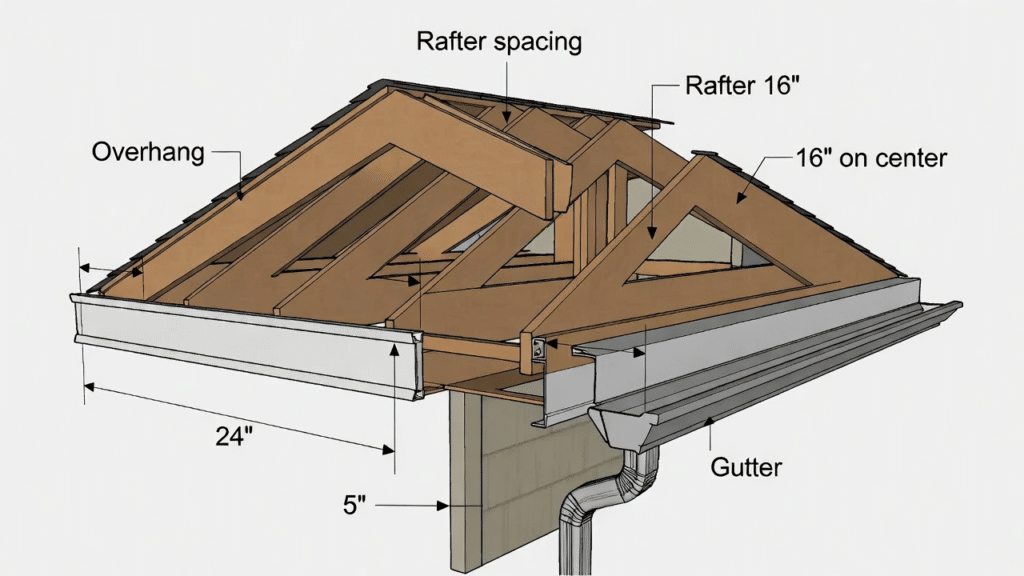
The roof overhang is supported by the tail ends of the rafters or trusses that extend past the wall plate. The underside of the overhang is typically enclosed with soffit panels, while the vertical face at the outer edge is covered by a fascia board. Together, these components create a finished, sealed overhang that protects the structural framing from exposure to the elements.
In the DFW area, most residential homes feature overhangs that range from 12 to 24 inches, though the exact dimension varies based on the architectural style, roof pitch, and the builder’s design specifications. Older homes in established Fort Worth neighborhoods often have more generous overhangs, while some newer construction homes have been built with minimal overhangs to maximize lot coverage.
How Roof Overhang Differs from a Soffit or Fascia
It is important to distinguish between the roof overhang itself and the components that finish it. The overhang is the structural extension of the roof. The soffit is the panel that covers the underside of that extension, and the fascia is the vertical board at the outer edge. All three elements work together, but the overhang dimension itself determines how much protection your home receives from rain, sun, and wind.
Optimal Roof Overhang Dimensions for North Texas
The ideal roof overhang dimension depends on your home’s architecture, the local climate, and the specific conditions of your property. However, general guidelines provide a useful starting point for DFW homeowners.
Standard Residential Overhang Sizes
For most residential homes in the Dallas-Fort Worth metroplex, a roof overhang between 12 and 18 inches provides a good balance of protection and structural stability. This dimension directs rainwater away from the walls while providing shade to reduce solar heat gain through windows.
Homes with single-story construction can benefit from longer overhangs of 18 to 24 inches because the overhang is closer to the ground and needs to project further to shield the lower walls. Two-story homes with wider overhangs on the upper level may not need as much extension on the first-floor roofline because the upper walls provide some protection for the lower level.
Climate Considerations for DFW
The DFW metroplex receives an average of 36 inches of rainfall per year, with much of it falling in intense, short-duration thunderstorms from March through October. This pattern of heavy, wind-driven rain makes adequate overhang dimensions especially important. During a typical DFW thunderstorm, rain does not fall straight down. It is driven at an angle by strong winds, which means a short overhang provides very little protection for your walls and foundation.
For maximum protection against North Texas rain patterns, an overhang of at least 16 to 20 inches on the eave side is recommended. This dimension allows the overhang to catch and redirect most wind-driven rain away from the exterior walls, even during moderately windy conditions.
Benefits of a Proper Roof Overhang
A well-designed roof overhang delivers multiple benefits that directly impact the comfort, energy efficiency, and longevity of your DFW home.
Rain and Moisture Protection
The most fundamental benefit of a roof overhang is directing rainwater away from your home’s walls, windows, and foundation. Without adequate overhang, rainwater runs directly down the exterior walls, saturating siding materials, penetrating window seals, and pooling around the foundation. Over time, this moisture exposure leads to mold growth, wood rot, paint failure, and foundation damage.
In the DFW area, where clay soils expand and contract dramatically with moisture changes, keeping water away from your foundation is critical. Excessive moisture near the foundation causes the soil to expand, putting pressure on foundation walls. When the soil dries out during hot summer months, it contracts and pulls away from the foundation, creating gaps. A proper roof overhang, combined with functional gutters and grading, is your first defense against this cycle.
Shade and Energy Efficiency
A properly sized roof overhang provides natural shade for your windows and exterior walls, reducing the amount of solar heat that enters your home. In the DFW metroplex, where summer temperatures routinely exceed 100 degrees and air conditioning accounts for a significant portion of monthly energy costs, this shade can make a meaningful difference in your utility bills.
South-facing and west-facing walls and windows receive the most direct sunlight during the hottest parts of the day. A well-designed overhang on these sides of your home can block high-angle summer sun while still allowing lower-angle winter sun to enter and provide natural warmth during cooler months. This passive solar design principle is especially effective in the DFW climate, where the sun angle changes significantly between summer and winter.
Protecting Exterior Finishes
Constant exposure to rain, sun, and temperature extremes accelerates the deterioration of your home’s exterior finishes. Paint fades and peels, wood siding warps and rots, and even brick and stone can develop moisture-related issues over time. A generous roof overhang shields these surfaces from the worst of the elements, extending the time between repainting, staining, or repairing your home’s exterior.
Homeowners in communities like Southlake, Bedford, and Euless who invest in high-quality exterior finishes benefit especially from adequate overhangs that protect their investment from premature wear.
Window and Door Protection
Your windows and exterior doors are among the most vulnerable points on your home’s exterior. During DFW rainstorms, wind-driven rain can push water past window seals and door frames, leading to leaks, water damage, and mold growth around window sills and door thresholds. A proper roof overhang reduces the amount of water that reaches these openings, extending the life of seals and weatherstripping and reducing the risk of water intrusion.
How DFW Climate Affects Roof Overhang Performance
The unique climate conditions in the Dallas-Fort Worth metroplex create specific challenges and considerations for roof overhang design and maintenance.
Wind Load Concerns
The DFW area experiences frequent high-wind events, from straight-line winds during thunderstorms to the occasional tornado. Longer roof overhangs create more surface area for wind to catch, which increases uplift forces on the roof structure. This is why overhang dimensions must balance protective coverage with structural integrity.
Modern building codes in Texas account for wind load when specifying maximum overhang dimensions and the structural connections required to support them. If you are considering extending your roof overhang, consult with a professional roofer or structural engineer to ensure the modification meets current code requirements for your area.
Hail Damage to Overhang Components
Hail is a frequent visitor to the DFW metroplex, with the area averaging multiple significant hailstorms each year. While the overhang itself provides some protection for walls below, the soffit and fascia components of the overhang are exposed to hail impact from below and at angles. After any hailstorm, inspect the underside of your overhang for dents, cracks, or holes in the soffit panels and check the fascia for impact damage.
Heat-Related Expansion and Contraction
The extreme temperature range in North Texas, from below-freezing winter nights to 100-plus-degree summer days, causes all building materials to expand and contract. This thermal cycling can loosen nails, open gaps at joints, and cause materials to warp or crack. Regular inspection of your overhang components helps catch these issues before they allow water or pests to enter.
Common Roof Overhang Problems

Understanding the most common overhang issues helps you identify problems early and address them before they cause significant damage.
Insufficient Overhang
Some homes, particularly newer construction built on smaller lots, have minimal overhangs of six inches or less. While this maximizes living space, it provides almost no protection for the walls and foundation. If your home has a short overhang, compensating measures such as extended gutters, rain chains, splash blocks, and frequent exterior maintenance become especially important.
Rotting Rafter Tails
The exposed ends of the rafters that support the overhang, called rafter tails, are vulnerable to moisture damage. If the soffit and fascia allow any water intrusion, the rafter tails can begin to rot, weakening the structural support for the entire overhang. Signs of rafter tail rot include a sagging roofline at the edges, gaps between the soffit and the wall, and soft or spongy fascia boards.
Blocked Soffit Ventilation
Overhang soffits often contain vents that allow fresh air into the attic. When these vents are blocked by insulation, paint buildup, or debris, attic ventilation is compromised. In the DFW climate, blocked soffit vents lead to excessive attic heat in summer and moisture buildup in winter, both of which shorten the lifespan of your roof.
Pest Entry Points
Gaps between the soffit and the exterior wall, cracks in aging soffit panels, and openings around soffit vents all provide entry points for birds, squirrels, bats, and insects. North Texas is home to a wide variety of wildlife that actively seeks shelter in attic spaces. Sealing these entry points during regular overhang maintenance is essential.
Maintaining Your Roof Overhang
Proactive maintenance protects the investment you have made in your home and helps avoid expensive emergency repairs.
Regular Visual Inspections
Walk the perimeter of your home at least twice per year and after any significant storm. Look up at the underside of the overhang and check for sagging soffit panels, peeling paint on the fascia, gaps at joints, and any signs of animal activity. Binoculars can help you get a closer look at areas that are difficult to see from the ground.
Gutter Maintenance
Your gutters attach to the fascia board along the overhang. Clogged or damaged gutters cause water to overflow against the fascia, accelerating rot and damage. Clean your gutters at least twice per year, more often if you have large trees near your home. Ensure that gutter hangers are secure and that the gutter slope directs water toward the downspouts.
Prompt Repairs
Do not delay repairs to damaged soffit, fascia, or rafter tails. What starts as a small crack or a single rotting board can quickly spread to adjacent components, especially during DFW’s wet spring season. Addressing problems early saves money and prevents secondary damage to your roof deck and attic.
Schedule Your Roof Overhang Consultation in DFW Today
Whether you are dealing with overhang damage from a recent storm, noticing signs of rot in your soffit or fascia, or simply want to ensure your roof’s edge protection is performing as it should, Veteran Brothers Roofing and Restoration is ready to help. We serve homeowners throughout the Dallas-Fort Worth metroplex and bring military-grade attention to detail to every inspection and repair.
We offer complimentary roof inspections for homeowners throughout the DFW area, including Fort Worth, Arlington, Keller, Grapevine, and surrounding communities. Our team will evaluate your roof overhang, soffit, fascia, and the overall condition of your roofline to identify any concerns before they become costly problems. You will receive an honest assessment with no pressure and no hidden agenda.
Call us at (817) 875-9834 to schedule your complimentary inspection. Let Veteran Brothers put their experience to work protecting your home.
Frequently Asked Questions
What is the ideal roof overhang size for DFW homes?
For most homes in the Dallas-Fort Worth area, a roof overhang of 16 to 20 inches on the eave side provides excellent protection against rain, sun, and wind-driven moisture. The optimal dimension depends on your home’s height, roof pitch, and the prevailing wind direction. Taller homes and steeper roofs may benefit from slightly longer overhangs to account for the increased distance between the roof edge and the ground.
Can I extend my existing roof overhang?
Yes, it is possible to extend an existing roof overhang, though the project requires careful structural analysis. The extension must be properly tied into the existing roof structure to handle wind loads and the weight of roofing materials. Most overhang extensions in the DFW area cost between $1,500 and $5,000 depending on the length and the amount of structural work required. A professional roofing contractor can assess your home and provide a detailed estimate.
Does a roof overhang really save energy in DFW?
A properly sized roof overhang can reduce solar heat gain through south-facing and west-facing windows by 30 to 50 percent during peak summer months. In the DFW metroplex, where cooling costs can easily exceed $200 to $400 per month during summer, this shade translates to meaningful energy savings over time. The overhang works best as part of an overall energy efficiency strategy that includes proper insulation, efficient windows, and adequate attic ventilation.
How does wind affect my roof overhang?
Wind creates uplift forces on the underside of roof overhangs. Longer overhangs catch more wind, which increases the stress on the connection between the overhang and the main roof structure. During severe DFW thunderstorms, wind gusts can exceed 70 mph, generating significant uplift forces. Proper nailing, hurricane clips, and structural ties help secure your overhang against these forces. If your overhang is longer than 24 inches, have a professional verify that the connections meet current wind load requirements.
About Veteran Brothers Roofing & Restoration
Veteran Brothers Roofing & Restoration is a trusted roofing company proudly serving homeowners and businesses throughout the Dallas-Fort Worth metroplex. Founded by military veterans, our team brings the same discipline, integrity, and attention to detail that defined our service to our country into every roofing project we take on. From roof overhang repairs and inspections to full roof replacements and storm damage restoration, we deliver exceptional craftsmanship backed by honest communication and transparent pricing. We proudly serve communities across the DFW area, including Fort Worth, Dallas, Arlington, Keller, Southlake, Grapevine, Bedford, Euless, and North Richland Hills. Contact us at (817) 875-9834 to schedule your free roof inspection today.
INCOMING MESSAGE
It’s storm season. If you think there’s been storm damage to your roof, or would simply like the peace of mind of knowing you’re in the clear, Veteran Brothers is here to help.
