
03/08/2026
The Complete Guide to Roof Drip Edge for North Texas Homeowners

A drip edge may be one of the most overlooked components of your roofing system, but it plays a critical role in protecting your North Texas home from water damage. This simple strip of metal, installed along the edges of your roof, directs water away from the fascia board and into the gutters, preventing costly rot, mold growth, and structural damage over time. For homeowners in the Dallas-Fort Worth metroplex, where severe thunderstorms, driving rain, and intense summer heat are part of everyday life, a properly installed drip edge is not just a nice addition. It is a necessity.
Whether you are building a new home in Fort Worth, replacing a roof in Arlington, or simply trying to understand the components that protect your home in Keller or Southlake, understanding the purpose and function of a drip edge will help you make informed decisions. Many homeowners do not realize that a missing or improperly installed drip edge can void manufacturer warranties and even violate local building codes. This guide walks you through everything you need to know about drip edge, from the different types and materials to the installation process and why it matters so much in the North Texas climate.
What Is a Drip Edge and Why Does It Matter?
A drip edge is a narrow strip of metal flashing that is installed along the eaves and rakes of a roof. Its primary purpose is to guide water runoff away from the underlying roof components and into the gutter system. Without a drip edge, rainwater can wick back along the edge of the roof deck through a process called capillary action. Over time, this moisture intrusion leads to rotting fascia boards, damaged soffit panels, and even compromised roof decking.
How a Drip Edge Protects Your Home
The drip edge serves several important functions beyond just directing water flow. It provides a clean, finished edge to the roofline and helps seal the gap between the roof deck and the fascia board. This seal prevents insects, small animals, and wind-driven rain from entering the space beneath your roofing materials. In the DFW area, where spring storms often produce horizontal rain pushed by strong winds, this protection is especially valuable.
A drip edge also supports the first row of shingles, giving them a stable surface to rest on. Without this support, shingles along the edge are more likely to sag, curl, or blow off during North Texas windstorms. This small piece of metal essentially acts as the first line of defense for the entire perimeter of your roof.
Building Code Requirements in Texas
The International Residential Code (IRC), which Texas follows, requires drip edge on all asphalt shingle roofs. Specifically, Section R905.2.8.5 mandates that a drip edge be provided at eaves and gables of shingle roofs. Many cities across the DFW metroplex, including Fort Worth, Dallas, and Arlington, enforce this requirement during inspections. Failing to install a drip edge can result in a failed inspection and may void your shingle manufacturer’s warranty. If you are filing an insurance claim for storm damage, the absence of a drip edge could complicate or reduce your payout.
Types of Drip Edge Profiles
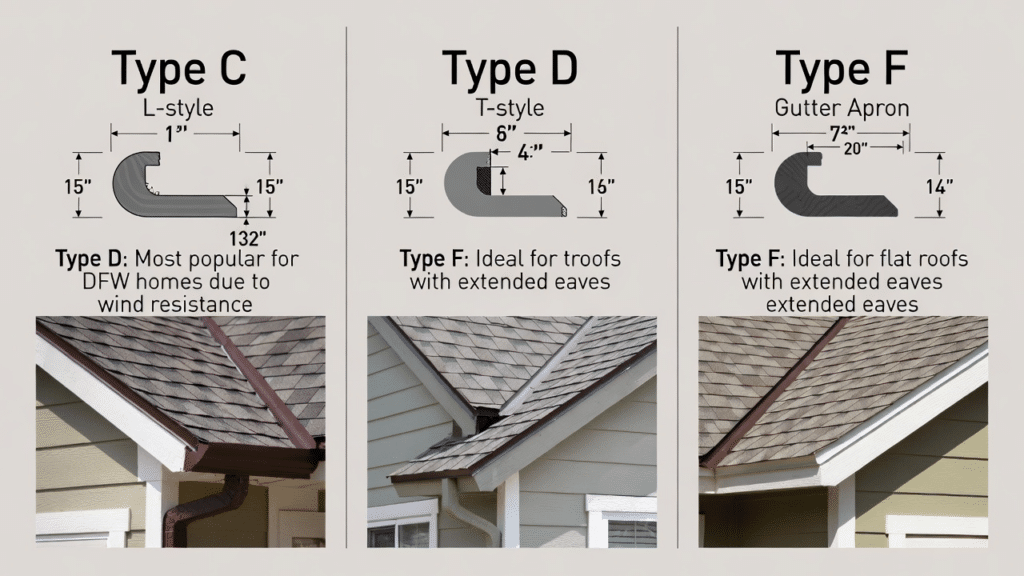
Not all drip edges are the same. There are three main profiles, each designed for a specific application. Choosing the right type depends on your roof’s configuration, whether you have gutters, and the overall drainage needs of your home.
Type C (L-Style) Drip Edge
Type C, also called the L-style drip edge, is the simplest and most basic profile. It features a straightforward L-shaped bend that directs water away from the fascia. While it is the least expensive option, it provides minimal protection compared to the other profiles. It works best on homes with properly aligned gutters that sit close to the roof edge, but it does not offer much kick-out to direct water into the gutter during heavy rain.
For North Texas homes that regularly deal with heavy downpours and wind-driven rain, the Type C profile is generally not the recommended choice for eave installations. However, it can work well along the rake edges of a roof where water flow is less concentrated.
Type D (T-Style) Drip Edge
Type D drip edge, commonly referred to as T-style, features an additional flange that extends outward and downward. This design creates a more effective channel to direct water away from the fascia and into the gutter. The extra lip prevents water from curling back underneath the metal, which is a common problem with L-style profiles during heavy rain.
This is the most popular drip edge profile for residential roofing projects throughout the DFW metroplex. Its combination of effective water management and reasonable cost makes it the go-to choice for most roofing contractors in Fort Worth and surrounding communities. If you are getting a full roof replacement in North Richland Hills, Bedford, or Euless, this is likely the profile your roofer will recommend.
Type F (Gutter Apron) Drip Edge
Type F drip edge, also known as a gutter apron, is the longest profile and extends further into the gutter trough. This design ensures that water is directed well past the fascia and into the gutter, even during the heaviest rainstorms. It is especially useful when the gutter does not sit directly beneath the roof edge or when there is a gap between the fascia and the gutter.
In older DFW homes where gutters may have shifted or settled over the years, the gutter apron style provides extra insurance against water bypassing the gutter system. It is also the preferred choice for homes in areas like Grapevine and Southlake that feature steeper roof pitches and higher water velocity at the eaves.
Drip Edge Materials: What Works Best in DFW

The material of your drip edge matters just as much as the profile. North Texas weather puts roofing components under significant stress, from extreme heat in summer to ice storms in winter. Choosing the right material ensures your drip edge lasts as long as your roof.
Aluminum Drip Edge
Aluminum is the most commonly used drip edge material in the DFW area. It is lightweight, corrosion-resistant, and available in a wide range of colors to match your roofing materials. Aluminum drip edge typically comes in 26-gauge thickness, which provides a good balance between durability and flexibility. It is also easy to bend and shape during installation, which makes it a favorite among roofing professionals.
For the average North Texas home, aluminum drip edge offers the best combination of performance, longevity, and value. It resists the rust and corrosion that can occur from repeated exposure to rain and humidity, and it handles the expansion and contraction caused by DFW’s wide temperature swings without cracking.
Galvanized Steel Drip Edge
Galvanized steel drip edge is stronger and more rigid than aluminum, making it a good choice for homes in areas prone to high winds or heavy debris. The zinc coating provides corrosion resistance, though it is not as long-lasting as aluminum in humid conditions. Over time, galvanized steel can develop rust spots, particularly at cut edges where the zinc coating has been removed.
This material works well for homes that need extra strength along the roof edges, such as properties surrounded by large trees in communities like Keller and Southlake. The added rigidity also helps support the edge of the roof deck in areas where decking may have softened slightly over time.
Copper Drip Edge
Copper drip edge is the premium option, offering exceptional durability and a distinctive appearance. Over time, copper develops a natural patina that many homeowners find attractive. Copper drip edge can last 50 years or more, far outlasting the roofing materials it protects.
However, copper drip edge is significantly more expensive than aluminum or galvanized steel. It is typically reserved for high-end custom homes or historic properties where aesthetics and longevity justify the investment. In the DFW metroplex, copper drip edge is most commonly seen on luxury homes in Southlake, Colleyville, and Westover Hills.
The Drip Edge Installation Process
Proper installation is just as important as choosing the right drip edge type and material. An improperly installed drip edge can actually cause more harm than having no drip edge at all, as it can trap water against the fascia or prevent proper gutter drainage.
Installation Along the Eaves
At the eaves (the horizontal edges at the bottom of the roof), the drip edge is installed directly over the roof deck before the underlayment is applied. This allows the underlayment to overlap the drip edge, creating a waterproof seal that channels water onto the metal rather than under the roofing materials. The drip edge should extend at least a quarter inch past the fascia board to create proper clearance for water to drip free.
Installation Along the Rakes
Along the rakes (the sloped edges on the sides of the roof), the installation order is reversed. The underlayment goes down first, and then the drip edge is installed on top of it. This ensures that any water running sideways along the roof is captured by the drip edge before it can reach the underlying wood. In the DFW area, where wind-driven rain commonly approaches from the south and southwest, proper rake installation is especially important.
Nailing and Overlap Requirements
Drip edge sections should overlap by at least two inches at joints and be secured with roofing nails spaced every 12 inches. At corners where the eave and rake drip edges meet, the rake piece should overlap the eave piece to create a seamless water channel. Each nail should be placed near the top of the drip edge to avoid creating a bump that could affect shingle alignment.
Why Drip Edge Is Critical for DFW Weather
North Texas weather presents unique challenges that make drip edge installation especially important. Understanding these weather patterns helps explain why cutting corners on this component is a costly mistake.
Severe Thunderstorms and Hail
The DFW metroplex sits squarely in the path of severe weather systems that move through North Texas from March through June. These storms often produce heavy rainfall rates exceeding two inches per hour, along with strong winds that push rain horizontally against roof edges. Without a drip edge, this wind-driven rain can penetrate beneath shingles and saturate the roof deck, leading to leaks and rot.
Hailstorms also pose a risk to exposed roof edges. A drip edge provides an extra layer of protection for the vulnerable edge of the roof deck, absorbing some of the impact that would otherwise hit the exposed wood or fascia directly.
Summer Heat and UV Exposure
North Texas summers routinely push temperatures above 100 degrees, and roof surface temperatures can exceed 150 degrees during peak afternoon heat. This extreme heat causes roofing materials to expand and contract daily. A properly installed drip edge accommodates this movement while maintaining its protective seal. Without one, the gap between the roof deck and fascia can open and close with temperature changes, allowing moisture and pests to enter.
Ice Storms and Freezing Rain
While less frequent, ice storms in the DFW area can cause significant damage to roofs without proper edge protection. Ice dams can form along the eaves when snow or ice melts during the day and refreezes at night. A drip edge helps prevent water from backing up under the shingles during these events, reducing the risk of interior leaks and ceiling damage.
Common Drip Edge Problems and How to Avoid Them
Even with proper initial installation, drip edge issues can develop over time. Regular inspection and maintenance help catch problems before they lead to expensive repairs.
Improper Installation
The most common drip edge problem is improper installation during the original roof build or a subsequent replacement. If the drip edge is installed on top of the underlayment at the eaves instead of beneath it, water can wick behind the metal and saturate the fascia. Always verify that your roofing contractor follows the correct installation sequence.
Corrosion and Deterioration
Over time, even high-quality drip edge materials can corrode, particularly at cut edges and nail holes. Regular inspection of your drip edge, especially after severe weather events, can help identify early signs of deterioration. If you notice rust spots, bent sections, or gaps at joints, contact a professional roofer to assess the situation.
Wind Damage
High winds can lift or bend drip edge sections, especially if the original installation used too few nails or the wrong nail spacing. After any major windstorm in the DFW area, take a moment to visually inspect your roof edges from the ground. If you see any sections that appear to be pulling away or bent upward, have them repaired before the next rainstorm.
Make Sure Your Roof Has Proper Drip Edge Protection in DFW
If you are unsure whether your home has a properly installed drip edge, or if you suspect your current drip edge has been damaged by a recent storm, Veteran Brothers Roofing and Restoration is here to help. Our experienced team of roofing professionals serves homeowners throughout the Dallas-Fort Worth metroplex and understands exactly what it takes to protect North Texas homes from the unique weather challenges this region presents.
We offer complimentary roof inspections for homeowners throughout the DFW area, including Fort Worth, Arlington, Keller, Southlake, and surrounding communities. During your inspection, we will assess your drip edge installation, check for any damage or improper installation, and provide you with a clear, honest evaluation of your roof’s condition. There is no obligation and no pressure.
Give us a call at (817) 875-9834 to schedule your complimentary roof inspection today. Our veteran-owned team is ready to give your home the protection it deserves.
Frequently Asked Questions
How much does drip edge installation cost in the DFW area?
Drip edge installation typically costs between $1.50 and $3.00 per linear foot for materials and labor in the DFW area. For an average-sized home with approximately 200 linear feet of roof edge, this translates to roughly $300 to $600. The cost varies based on the material chosen and the profile type. When installed as part of a full roof replacement, many contractors include drip edge in the overall project cost rather than charging separately.
Can I install drip edge on my existing roof without a full replacement?
It is possible to retrofit drip edge on an existing roof, but it is more complex and labor-intensive than installing it during a roof replacement. The first row of shingles must be carefully lifted or removed, the drip edge slid into place, and the shingles re-secured. This process can risk damaging older, brittle shingles. Most roofing professionals in the Fort Worth area recommend adding drip edge during your next scheduled roof replacement for the best results.
Is drip edge required by code in Fort Worth and Dallas?
Yes. Both Fort Worth and Dallas follow the International Residential Code, which requires drip edge on all asphalt shingle roofs. Building inspectors throughout the DFW metroplex check for proper drip edge installation as part of the roofing permit inspection process. Failing to include a drip edge can result in a failed inspection and may require costly rework.
How long does a drip edge last?
The lifespan of a drip edge depends on the material. Aluminum drip edge typically lasts 20 to 30 years, matching the lifespan of most asphalt shingle roofs. Galvanized steel may last 15 to 25 years depending on environmental conditions. Copper drip edge can last 50 years or more. In North Texas, the combination of heat, rain, and occasional hail means regular inspection is important regardless of material choice.
About Veteran Brothers Roofing & Restoration
Veteran Brothers Roofing & Restoration is a trusted roofing company proudly serving homeowners and businesses throughout the Dallas-Fort Worth metroplex. Founded by military veterans, our team brings the same discipline, integrity, and attention to detail that defined our service to our country into every roofing project we take on. From drip edge installation and roof inspections to full roof replacements and storm damage restoration, we deliver exceptional craftsmanship backed by honest communication and transparent pricing. We proudly serve communities across the DFW area, including Fort Worth, Dallas, Arlington, Keller, Southlake, Grapevine, Bedford, Euless, and North Richland Hills. Contact us at (817) 875-9834 to schedule your free roof inspection today.
INCOMING MESSAGE
It’s storm season. If you think there’s been storm damage to your roof, or would simply like the peace of mind of knowing you’re in the clear, Veteran Brothers is here to help.
