03/08/2026
The Essential Guide to Soffit and Fascia Care for DFW Homeowners

Soffit and fascia are two of the most important yet frequently overlooked components of your home’s roofing system. Together, they form the finishing edge of your roofline, protecting your home from moisture intrusion, pest infestations, and structural decay while contributing to the overall appearance and curb appeal of your property. For homeowners throughout the Dallas-Fort Worth metroplex, where extreme heat, powerful thunderstorms, and occasional ice events test every part of your home’s exterior, keeping your soffit and fascia in good condition is essential to maintaining a healthy roof.
Many DFW homeowners do not think about their soffit and fascia until visible damage appears, such as peeling paint, sagging panels, or evidence of animal intrusion. By that point, the underlying damage may be more extensive than what is visible from the ground. Understanding what these components do, what they are made of, and how to maintain them will help you protect your investment and avoid costly repairs down the road. Whether you own a home in Fort Worth, Keller, Grapevine, or North Richland Hills, the information in this guide applies directly to you.
What Are Soffit and Fascia?
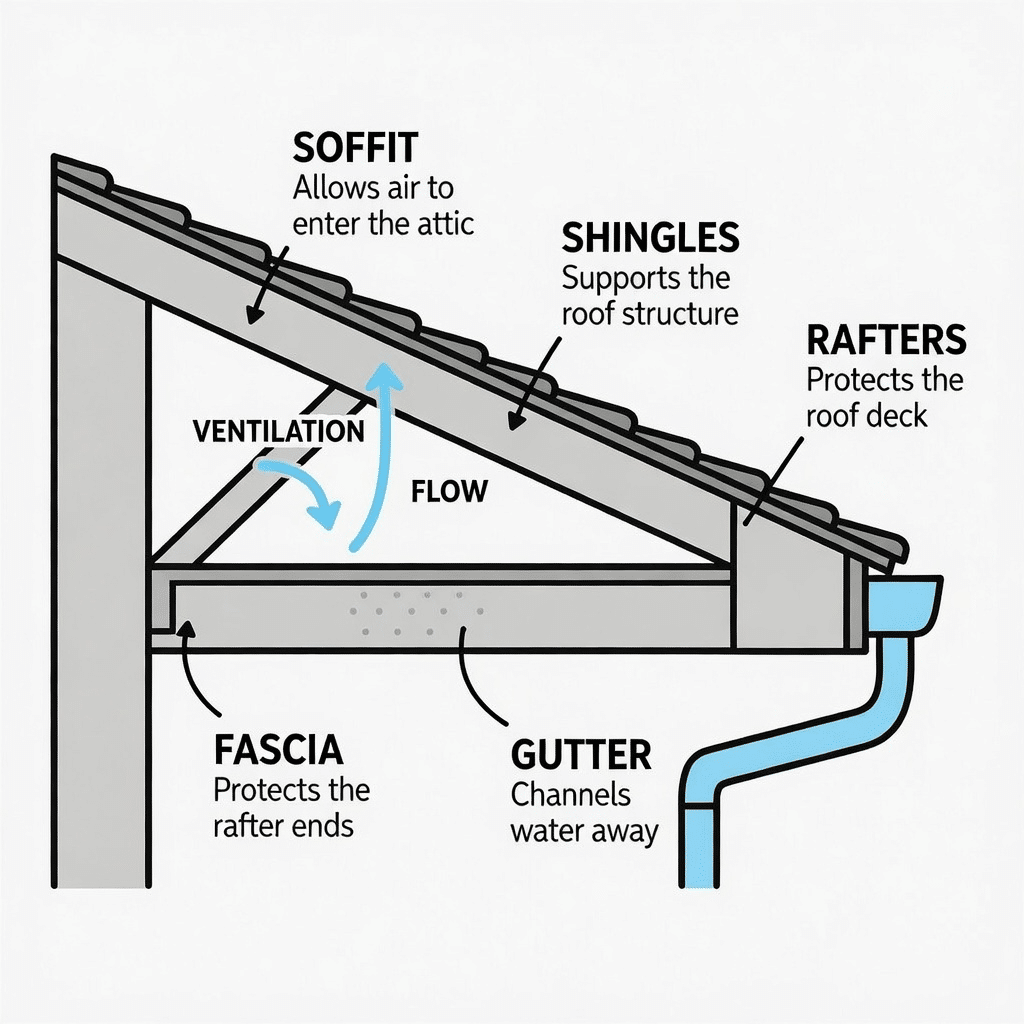
Before diving into maintenance and repair, it is important to understand what soffit and fascia are and the distinct roles they play in your roofing system. These two components work together to seal the gap between the roof edge and the exterior walls of your home.
Understanding Fascia
Fascia is the vertical board that runs along the lower edge of your roofline, directly behind your gutters. It is the “face” of your roof’s overhang and is the most visible component from street level. The fascia board serves as the mounting surface for your gutter system and provides a finished, clean look to the edge of your roof.
Beyond aesthetics, fascia plays a structural role by supporting the bottom row of roof tiles or shingles and helping to bear the weight of the gutter system and any water or debris it carries. In the DFW area, where gutters can fill rapidly during intense thunderstorms, strong fascia boards are critical. A compromised fascia board can lead to sagging gutters, improper water drainage, and moisture damage to the roof deck and interior walls.
Understanding Soffit
Soffit is the horizontal panel that covers the underside of the roof overhang, connecting the bottom edge of the fascia to the exterior wall of the house. If you stand directly beneath your roof’s overhang and look up, the flat panel you see is the soffit.
Soffit serves two primary purposes. First, it protects the rafters and roof structure from the elements by sealing off the underside of the roof overhang. Without soffit, rain, wind, and pests would have direct access to the interior roof structure. Second, vented soffit panels are one of the most important sources of attic ventilation. Small perforations in the soffit allow fresh air to flow into the attic space, which is critical for regulating temperature and moisture levels in your DFW home.
The Critical Role of Soffit and Fascia in Your Roofing System
Soffit and fascia do far more than simply finish the appearance of your roofline. They are functional components that directly impact the health and longevity of your entire roofing system.
Ventilation and Energy Efficiency
In the DFW metroplex, where summer temperatures regularly exceed 100 degrees, attic ventilation is essential. Without proper airflow, attic temperatures can climb to 150 degrees or higher, putting tremendous stress on roofing materials from the underside and driving up cooling costs. Vented soffit panels allow cooler outside air to enter the attic at the eaves, pushing hot air upward and out through ridge vents or roof vents.
This continuous airflow cycle helps regulate attic temperature, extends the life of your shingles, and reduces the load on your air conditioning system. Homes in Fort Worth, Arlington, and Bedford with blocked or inadequate soffit ventilation often experience premature shingle failure and significantly higher energy bills during summer months.
Moisture Protection
DFW weather is known for rapid transitions between dry heat and heavy rain. Soffit and fascia create a sealed barrier that prevents moisture from reaching the wooden structural components of your roof. When soffit panels crack, warp, or develop gaps, moisture can enter the attic space and condense on cooler surfaces, leading to mold growth, wood rot, and insulation damage.
Fascia boards are particularly vulnerable to moisture damage because they sit at the point where water runs off the roof and into the gutters. Any imperfection in the gutter system, such as clogs, improper slope, or overflow during heavy rain, can cause water to back up against the fascia. Over time, this repeated exposure weakens the wood and creates entry points for further water damage.
Pest Prevention
The space beneath your roof overhang is an attractive nesting site for birds, squirrels, wasps, bats, and other wildlife common in the North Texas area. Intact soffit and fascia panels deny these animals access to your attic and roof structure. Once pests gain entry, they can cause significant damage by chewing through insulation, wiring, and wooden structural components. Maintaining sealed soffit and fascia is one of the most effective ways to keep wildlife out of your home.
Soffit and Fascia Materials: Comparing Your Options

The material you choose for your soffit and fascia affects durability, maintenance requirements, cost, and appearance. Here is a breakdown of the most common options available to DFW homeowners.
Wood Soffit and Fascia
Wood is the traditional material for soffit and fascia and remains common in many older DFW homes. It offers a classic appearance and can be painted to match any color scheme. However, wood is the most maintenance-intensive option. It requires regular painting or staining to protect against moisture, and it is susceptible to rot, warping, and insect damage, particularly from termites that are prevalent throughout North Texas.
If you have wood soffit and fascia, plan to inspect and repaint every three to five years. Watch for soft spots, peeling paint, and any signs of insect activity. Many homeowners in the DFW area choose to replace aging wood soffit and fascia with more durable materials during a roof replacement project.
Vinyl Soffit and Fascia
Vinyl is one of the most popular soffit and fascia materials in the DFW residential market. It is affordable, lightweight, and virtually maintenance-free. Vinyl will not rot, rust, or attract insects, and it never needs painting. It is available in a wide range of colors and styles, including options that mimic the appearance of wood grain.
The primary drawback of vinyl in the North Texas climate is its response to extreme heat. Vinyl can expand, contract, and occasionally warp under the intense summer sun. However, high-quality vinyl products designed for southern climates handle these conditions well. Vinyl soffit panels are available in both solid and vented configurations, making it easy to ensure proper attic ventilation.
Aluminum Soffit and Fascia
Aluminum offers excellent durability and weather resistance, making it a strong choice for DFW homes. It resists rust, rot, and insect damage while handling temperature extremes better than vinyl. Aluminum soffit and fascia come in a variety of factory-applied colors and finishes that last for decades without fading or peeling.
Aluminum is more expensive than vinyl but less expensive than fiber cement. It is a particularly good choice for homes in areas prone to severe weather, such as communities along the Interstate 35W corridor from Fort Worth to Denton. The material holds up well against hail impact and high winds that frequently accompany DFW thunderstorms.
Fiber Cement Soffit and Fascia
Fiber cement, such as the products manufactured by James Hardie, represents the premium option for soffit and fascia in the DFW area. It combines the appearance of wood with exceptional durability against moisture, fire, insects, and extreme temperatures. Fiber cement will not warp, rot, or crack under the demanding conditions of the North Texas climate.
The main considerations with fiber cement are cost and installation complexity. It is heavier than other materials and requires professional installation, which adds to the overall project cost. However, many homeowners in Southlake, Keller, and Grapevine choose fiber cement for its longevity and low maintenance requirements, viewing it as a long-term investment in their home’s value.
Signs of Soffit and Fascia Damage
Catching soffit and fascia damage early can prevent expensive repairs to your roof structure, attic, and interior. Here are the most common warning signs DFW homeowners should watch for.
Visible Rot or Soft Spots
If your fascia boards appear swollen, discolored, or soft to the touch, rot has already set in. Wood rot spreads quickly, especially during the warm, humid conditions common in DFW from spring through fall. Do not ignore even small areas of rot, as the damage beneath the surface is typically more extensive than what you can see.
Peeling or Flaking Paint
Peeling paint on fascia boards is more than a cosmetic issue. It indicates that moisture is reaching the wood beneath the paint layer. This is often one of the earliest signs of fascia damage and should prompt a closer inspection to assess the condition of the underlying wood.
Sagging or Warped Panels
Soffit panels that appear to sag, pull away from the wall, or show signs of warping indicate either water damage or structural issues with the supporting framework. In some cases, the weight of water-saturated insulation in the attic above can cause soffit panels to bow downward.
Animal Activity or Nesting
If you see birds, squirrels, or insects entering your roofline, your soffit or fascia likely has gaps or holes that need repair. Listen for scratching or scurrying sounds in the attic, especially in the early morning or evening hours. The sooner you seal these entry points, the less damage wildlife will cause inside your home.
Mold or Mildew Growth
Dark spots or streaks on your soffit panels may indicate mold or mildew growth caused by trapped moisture. In the DFW area, where humidity levels can spike during spring and fall, mold can develop quickly in poorly ventilated soffit areas. This is both a structural concern and a potential health issue for your family.
Soffit and Fascia Maintenance Tips for DFW Homeowners
Regular maintenance extends the life of your soffit and fascia and helps you avoid costly emergency repairs. Here is a seasonal maintenance plan tailored to the DFW climate.
Spring Inspection
After the severe weather season begins in March and April, inspect your soffit and fascia for any damage caused by winter ice, spring storms, or hail. Clean vented soffit panels to remove dust, dirt, and debris that may have accumulated over the winter. Ensure that gutter downspouts are directing water away from fascia boards and that gutters are properly secured.
Summer Monitoring
During the hottest months, watch for signs of warping or expansion, particularly if you have vinyl soffit and fascia. Ensure that attic ventilation is functioning properly by checking that soffit vents are not blocked by insulation or debris. Proper airflow through the soffit is critical for managing attic heat during DFW summers.
Fall Preparation
Before winter arrives, clean your gutters and verify that they are draining properly. Clogged gutters cause water to overflow against fascia boards, accelerating rot and damage. Trim any tree branches that hang close to your roofline, as falling leaves and branches can damage soffit and fascia panels and provide pathways for animals to access your roof.
Winter Checks
After any ice storm or freezing event, inspect your soffit and fascia for damage caused by ice accumulation or falling ice. Check for any gaps or cracks that may have formed due to the contraction of materials in cold temperatures. Even in North Texas, where winter weather is relatively mild, the occasional hard freeze can stress vulnerable roofing components.
Repair vs. Replacement: Making the Right Call
When soffit and fascia show signs of damage, the decision between repair and replacement depends on several factors, including the extent of the damage, the age of the existing materials, and your long-term plans for the home.
When Repair Makes Sense
Minor damage limited to a small area, such as a single fascia board with early rot or a cracked soffit panel, can often be repaired without replacing the entire system. Repairs are also appropriate when the damage is recent, the surrounding materials are in good condition, and the underlying structure is sound. Typical repair costs in the DFW area range from $200 to $600 depending on the scope of work.
When Replacement Is the Better Option
If damage is widespread, if the materials are near the end of their lifespan, or if you are already planning a roof replacement, full soffit and fascia replacement is usually the more cost-effective choice. Replacement costs in the DFW area typically range from $2,000 to $6,000 for an average-sized home, depending on the material chosen. Many homeowners take this opportunity to upgrade from wood to aluminum or fiber cement for reduced long-term maintenance.
Protect Your DFW Home with a Soffit and Fascia Inspection
If you have noticed signs of soffit or fascia damage on your DFW home, or if it has been more than a year since your last professional inspection, now is the right time to take action. Veteran Brothers Roofing and Restoration specializes in soffit and fascia repair and replacement throughout the Dallas-Fort Worth metroplex, and we bring the same precision and integrity to every project that defined our service in the military.
Our team provides complimentary inspections for homeowners throughout Fort Worth, Arlington, Keller, Grapevine, North Richland Hills, and surrounding communities. We will thoroughly evaluate the condition of your soffit and fascia, check for moisture damage, pest entry points, and ventilation issues, and give you a straightforward assessment with no inflated estimates or unnecessary upsells.
Contact Veteran Brothers today at (817) 875-9834 to schedule your complimentary inspection. Protecting your home starts with knowing what you are working with.
Frequently Asked Questions
How much does soffit and fascia replacement cost in the DFW area?
Full soffit and fascia replacement for an average DFW home typically costs between $2,000 and $6,000 depending on the material selected. Vinyl is the most affordable option, followed by aluminum. Fiber cement and custom wood options are at the higher end of the range. Labor costs in the Fort Worth area generally run between $5 and $12 per linear foot. Many homeowners save by combining soffit and fascia work with a full roof replacement.
How often should I inspect my soffit and fascia?
A thorough inspection at least twice per year is recommended for DFW homeowners. The best times are in early spring after winter weather events and in late fall before the cold season begins. You should also inspect after any major storm, particularly hailstorms or high-wind events that frequently occur in the Dallas-Fort Worth area from March through June.
Can damaged soffit affect my attic ventilation?
Absolutely. Damaged or blocked soffit vents significantly reduce attic airflow, which can lead to excessive heat buildup in summer and moisture accumulation in winter. In the DFW area, inadequate attic ventilation from damaged soffit is one of the leading causes of premature shingle deterioration and elevated cooling costs. If your energy bills have increased without explanation, damaged soffit ventilation may be a contributing factor.
What is the best soffit material for North Texas homes?
Aluminum and fiber cement are the top performers for North Texas homes. Both materials handle the extreme heat, heavy rain, and occasional ice that characterize DFW weather. Aluminum offers the best balance of performance and cost, while fiber cement provides the longest lifespan and most attractive finish. Vinyl is a good budget-friendly option for homeowners who want low maintenance, though it may show wear sooner in the intense Texas sun.
About Veteran Brothers Roofing & Restoration
Veteran Brothers Roofing & Restoration is a trusted roofing company proudly serving homeowners and businesses throughout the Dallas-Fort Worth metroplex. Founded by military veterans, our team brings the same discipline, integrity, and attention to detail that defined our service to our country into every roofing project we take on. From soffit and fascia repair and replacement to full roof replacements and storm damage restoration, we deliver exceptional craftsmanship backed by honest communication and transparent pricing. We proudly serve communities across the DFW area, including Fort Worth, Dallas, Arlington, Keller, Southlake, Grapevine, Bedford, Euless, and North Richland Hills. Contact us at (817) 875-9834 to schedule your free roof inspection today.
INCOMING MESSAGE
It’s storm season. If you think there’s been storm damage to your roof, or would simply like the peace of mind of knowing you’re in the clear, Veteran Brothers is here to help.
